
Hydration is key
Published on · 4 min read · by Manuel Martínez
hydration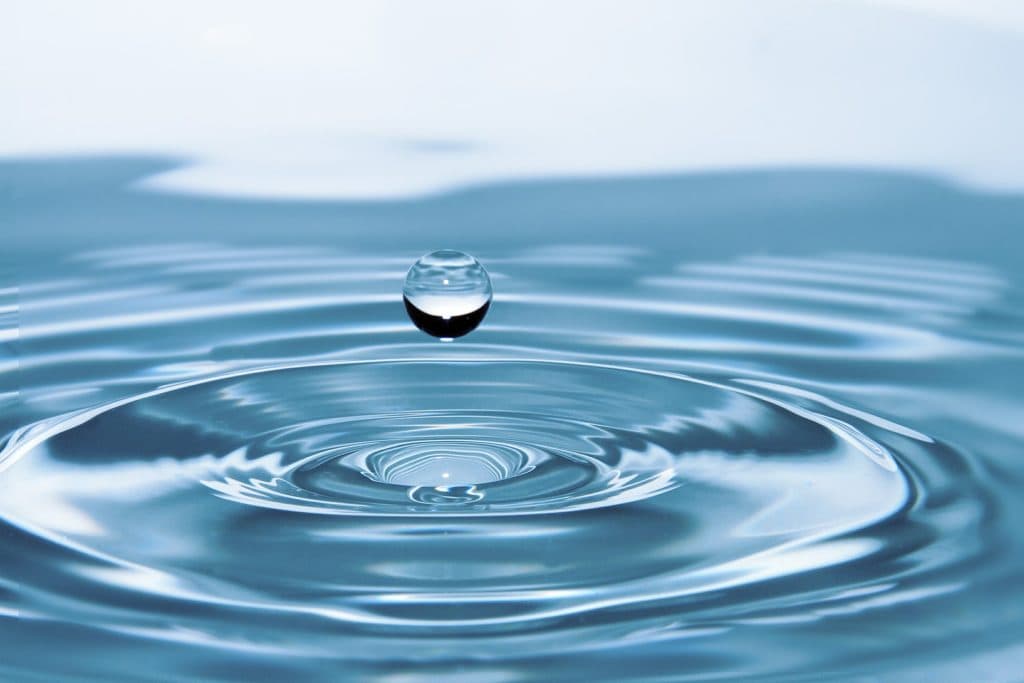
Water alone does not hydrate: without minerals, it dilutes your internal environment and is expelled. Being truly hydrated depends on water retention inside the cells, a biological balance governed by natural salt (sodium).
Why is sodium indispensable?
- Osmotic pressure and volume: Sodium retains water inside the cytoplasm and in the bloodstream, preventing drops in blood pressure, cramps, and fatigue.
- Cortisol brake and nighttime protection: A full blood volume shuts down daytime stress hormones and prevents awakenings due to dehydration or nocturia (getting up to urinate at night).
- Cellular efficiency: It allows nutrients to enter the myocyte and waste products to exit without overloading renal filtration.
How much water and how much salt do you need?
There are no fixed formulas; the exact dose depends directly on your body weight, your activity level, and the climate:
- Base water: Calculate between 30 and 35 ml of water per kilogram of body weight per day as a starting point.
- Natural sea salt (unrefined): Add 0.8 to 1.2 g of sea salt per 500 ml of water (approximately 2.5 to 4.5 g of sea salt per day in your usual thermos).
- Individual adjustment factors:
- Dry or hot climate / Sun exposure: Increase salt by an extra 1 g per day to compensate for insensible perspiration.
- Fasting or low-carbohydrate diets (ketogenic/OMAD): When insulin drops, the kidneys continuously expel sodium; you need to ensure daily salt intake to avoid dizziness or fatigue.
- Physical activity or sweating: Replenish immediately with salt water, never with distilled or plain water.
Practical implementation guidelines
- Mineralize your water: Add whole sea salt crystals to the water you drink throughout the day; the taste should be mild, never briny like seawater.
- Drink in regular sips in the morning and afternoon: Avoid drinking large volumes at once that trigger the diuretic reflex.
- Establish an evening water cutoff: Stop fluid intake 3 to 4 hours before sleep (around 4:30–5:00 p.m.) to protect the architecture of deep sleep.
True hydration is not measured by how much water passes through your kidneys, but by how much your cells retain.
Bibliography and scientific foundations
- Hall, J. E., & Hall, M. E. (2020). Guyton and Hall Textbook of Medical Physiology (14th ed.). Elsevier.
- Foundation: Describes the compartmentalization of body fluids (intracellular vs. extracellular fluid), the role of the sodium ion as the primary determinant of plasma osmolality and blood volume, as well as the functioning of the $\text{Na}^+/\text{K}^+$-ATPase pump and sodium-coupled cotransporters for nutrient entry into the cell (as in muscle tissue).
- Evans, G. H., James, L. J., Shirreffs, S. M., & Maughan, R. J. (2017). Optimizing the restoration and maintenance of fluid balance after exercise-induced dehydration. Journal of Applied Physiology, 122(4), 945–951.
- Foundation: Provides evidence of how intake of water devoid of solutes rapidly decreases plasma osmolality and induces an early reflex diuresis that prevents effective fluid retention, whereas the inclusion of sodium preserves intravascular volume and reduces urinary losses.
- Sawka, M. N., Burke, L. M., Eichner, E. R., Maughan, R. J., Montain, S. J., & Stachenfeld, N. S. (2007). American College of Sports Medicine position stand: Exercise and fluid replacement. Medicine & Science in Sports & Exercise, 39(2), 377–390.
- Foundation: Supports the need to individualize fluid and electrolyte intake according to environmental factors (heat, humidity) and physical exertion, warning about the risk of hyponatremia due to overconsumption of plain water and providing a basis for sodium replacement to avoid cramps and hemodynamic imbalances.
- Graudal, N. A., Hubeck-Graudal, T., & Jürgens, G. (2020). Effects of low sodium diet versus high sodium diet on blood pressure, renin, aldosterone, catecholamines, and lipids. Cochrane Database of Systematic Reviews, (12), CD004022.
- Foundation: Reviews the body's response to sodium scarcity or plasma volume contraction, documenting the reactive elevation of the renin-angiotensin-aldosterone system (RAAS) and the sympathetic-adrenal system (catecholamines and physiological stress signals).
- Heyman, S. N., Bursztyn, M., Szalat, A., Muszkat, M., & Abassi, Z. (2020). Fasting-Induced Natriuresis and SGLT: A New Hypothesis for an Old Enigma. Frontiers in Endocrinology, 11, 217.
- Foundation: Explains the physiological phenomenon known as fasting natriuresis and of carbohydrate-restricted diets: when insulin concentrations fall and sodium-glucose cotransport (SGLT) is reduced at the proximal tubular level, the kidney eliminates sodium and water at an accelerated rate, justifying salt supplementation to prevent asthenia, dizziness, and hypotension.
#water#health#habits#electrolytes
Comments (0)
Be the first to comment.
Share this post
Did this article help you?
Write to me and tell me about your case — I answer personally.
Get in touch